
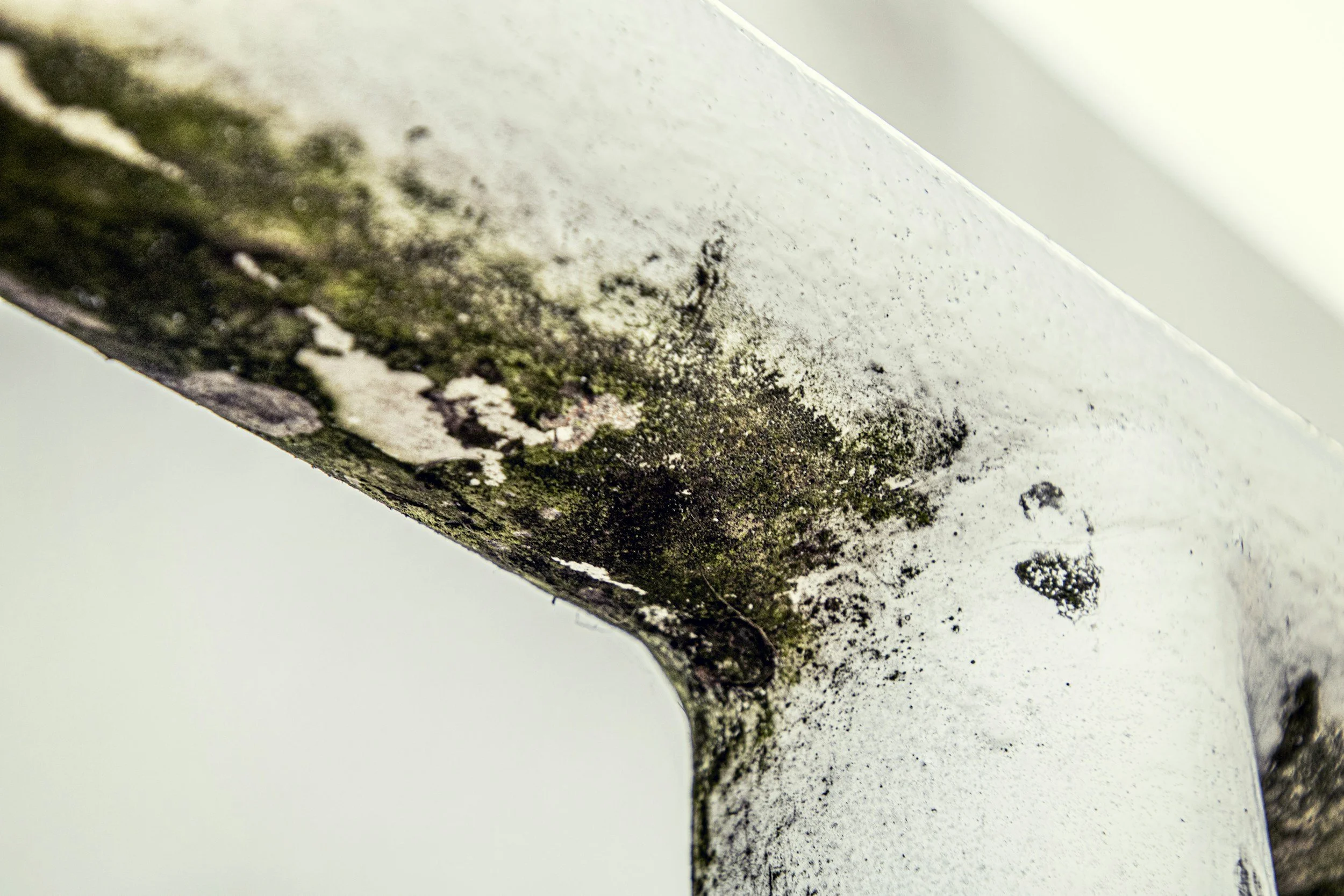
Mold can start growing on wet materials within a day or two. That's why the EPA says to dry water-damaged areas within 24 to 48 hours. A small patch on a hard surface, under about 10 square feet, is usually something you can clean yourself. Bigger than that, hidden inside a wall, or left behind by a major leak? That's a job for professional remediation.
The pattern is familiar. Water gets in: a pipe in an empty house, an ice dam over a back bedroom, a slow drip under a sink. It gets mopped up and the surface looks fine. A few weeks later the room smells musty.
How fast it grows
According to the EPA, if wet materials get dried within 24 to 48 hours, mold usually won't grow. After that, damp drywall, wood, carpet pad and insulation are all fair game. And it rarely starts where you can see it. The back side of drywall and the underside of flooring are where it tends to show up first.
So the drying matters more than the cleanup. Getting materials truly dry, confirmed with a moisture meter, is the thing that prevents mold.
Where it hides in mountain homes
Behind drywall below an old leak, especially on outside walls. Under carpet pad that only got dried on top. In attics and ceilings under ice dams. In crawlspaces where pipes freeze and snowmelt collects. In bathrooms and laundry rooms that don't vent well. Behind and under kitchen cabinets after a dishwasher leak.
Our dry mountain air helps once a space is open and moving air. It does nothing for a closed wall cavity or a soaked pad.
Can you clean it yourself?
Sometimes. EPA guidance says that for mold covering less than about 10 square feet (roughly 3 feet by 3 feet), most homeowners can handle it. Fix whatever's causing the moisture first. Scrub hard surfaces with detergent and water. Dry everything completely. The EPA's mold guide covers protective gear and what to do with porous materials.
| Situation | DIY or pro? | Why |
|---|---|---|
| Small spot (under about 10 sq ft) on tile, glass or paint | DIY | Small, visible, cleanable surface |
| More than about 10 sq ft | Pro | EPA suggests considering a professional |
| Musty smell, no visible mold | Pro | Probably in a wall, under flooring or in the attic |
| Mold after a burst pipe, ice dam or major leak | Pro | The wet area is likely bigger than what you see |
| Mold in pad, insulation or drywall | Pro | Porous materials usually have to come out |
| Keeps coming back | Pro | The moisture source isn't fixed |
What professional remediation involves
The goal is to get the mold out and fix why it grew, without spreading spores to the rest of the house. That means finding the moisture source and mapping how far it went, sealing off the work area, removing moldy materials that can't be cleaned, cleaning the framing and hard surfaces, drying the structure, and checking that everything is clean and dry before anything gets rebuilt.
Cost
This Old House puts professional mold remediation at $1,200 to $3,750 nationally, averaging around $2,300. Small, contained jobs cost less. Mold that has spread through walls, an attic or ductwork can cost a lot more. Size, access, and how much material has to come out drive the price.
Preventing it after a leak
Start drying the same day. Pull up wet rugs and get air under the furniture. Run fans and dehumidifiers, and don't stop just because the surface feels dry. After any real leak, have someone take moisture readings in the walls and floor. And fix the cause, whether that's the pipe, the roof or the ventilation.
A few common questions
Does bleach kill mold?
The EPA doesn't recommend bleach as a routine part of mold cleanup. Detergent and water on hard surfaces, plus fixing the moisture, is the standard approach. Bleach can't fix porous materials, and mold returns if things stay damp.
Will it come back after remediation?
Not if the water problem is solved and everything is fully dried. Mold comes back when the moisture does.
Is mold covered by insurance?
Sometimes. Mold from a sudden, covered event like a burst pipe may be covered, often with limits. Mold from long-term leaks or humidity usually isn't. Check your policy.
Found mold, or had a leak you're not sure dried out? Call Mammoth King at (760) 924-3681.
Mold Remediation · Water Damage Restoration · Burst Pipe, What to Do · Ice Dams
Sources: EPA: Mold information · EPA: A Brief Guide to Mold, Moisture and Your Home · This Old House: Mold remediation cost
